
Research on Reishi

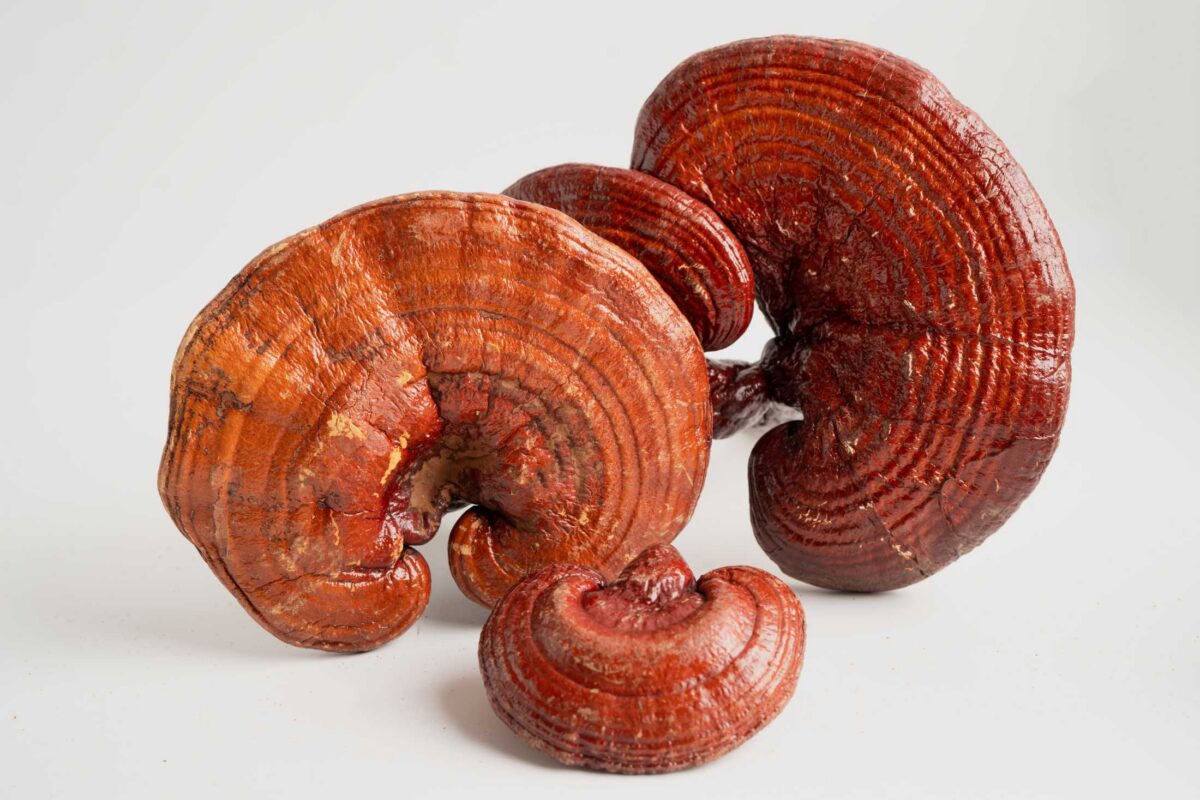
Unlike culinary mushrooms, Reishi is typically consumed in extracts, powders, teas, or capsules. Modern scientific interest focuses not on folklore, but on its biochemical composition, particularly compounds such as triterpenoids, polysaccharides (including beta-glucans), and other secondary metabolites that researchers have studied in laboratory and clinical settings.
One widely cited scientific overview of this mushroom appears in Herbal Medicine: Biomolecular and Clinical Aspects, in the chapter titled “Ganoderma lucidum (Lingzhi or Reishi): A Medicinal Mushroom”.
Chapter Introduction
The chapter begins by outlining Reishi’s long-standing role in traditional Chinese medicine, where it has historically been classified as a superior herb. The authors note that while traditional systems attributed broad wellness-supporting properties to the mushroom, modern research aims to understand its activity through chemical analysis and biomedical investigation.
The introduction explains that scientific interest in Reishi largely centers on two major groups of compounds:
- Polysaccharides, particularly beta-glucans, which are studied for their interaction with immune-related pathways.
- Triterpenoids, including ganoderic acids, which have been examined in laboratory research for various biological activities.
The authors emphasize that much of the early evidence comes from in vitro (cell-based) and animal studies. They also highlight that while interest is strong, human clinical research remains more limited in scope and scale compared to laboratory data.
Chapter Conclusion
In the conclusion, the authors reiterate that Ganoderma lucidum contains a diverse array of bioactive compounds that have demonstrated biological activity in experimental models.
They note that laboratory studies have explored areas such as:
- Immune system modulation
- Antioxidant activity
- Effects observed in cancer-related experimental models
- Liver-related and cardiovascular-related research models
However, the authors also stress that while preclinical findings are substantial, more well-designed human clinical trials are needed to fully confirm efficacy, clarify dosing, and total effectiveness.
Our Thoughts
Research on Reishi reflects an interesting intersection between traditional herbal practice and modern laboratory science. The reviewed chapter presents Ganoderma lucidum as a chemically complex mushroom that has attracted serious scientific attention, particularly for its polysaccharides and triterpenoids.
At the same time, the authors make it clear that further research is needed to fully verify and vet current understandings of Reishi and its overall effectiveness.
At Organic Mushrooms, we recognize the growing scientific interest surrounding Reishi and look forward to continued research on functional mushrooms, regardless of the conclusions future studies may present.
Disclaimer
Any and all references to biological activities, experimental findings, or potential health-related effects mentioned above are drawn directly from the chapter “Ganoderma lucidum (Lingzhi or Reishi): A Medicinal Mushroom” in Herbal Medicine: Biomolecular and Clinical Aspects (2nd edition, 2011). This blog is a summary of that source and does not constitute medical advice, diagnosis, or treatment recommendations.